ServicesSolar Panel Installation
Solar Panel Installation in Rowlett
Before we talk panel counts, we get on your roof, open your electrical panel and read a year of your bills. Then we tell you plainly what solar can do for your home, what it can't, and what we'd build if it makes sense.
What a New Solar System Involves
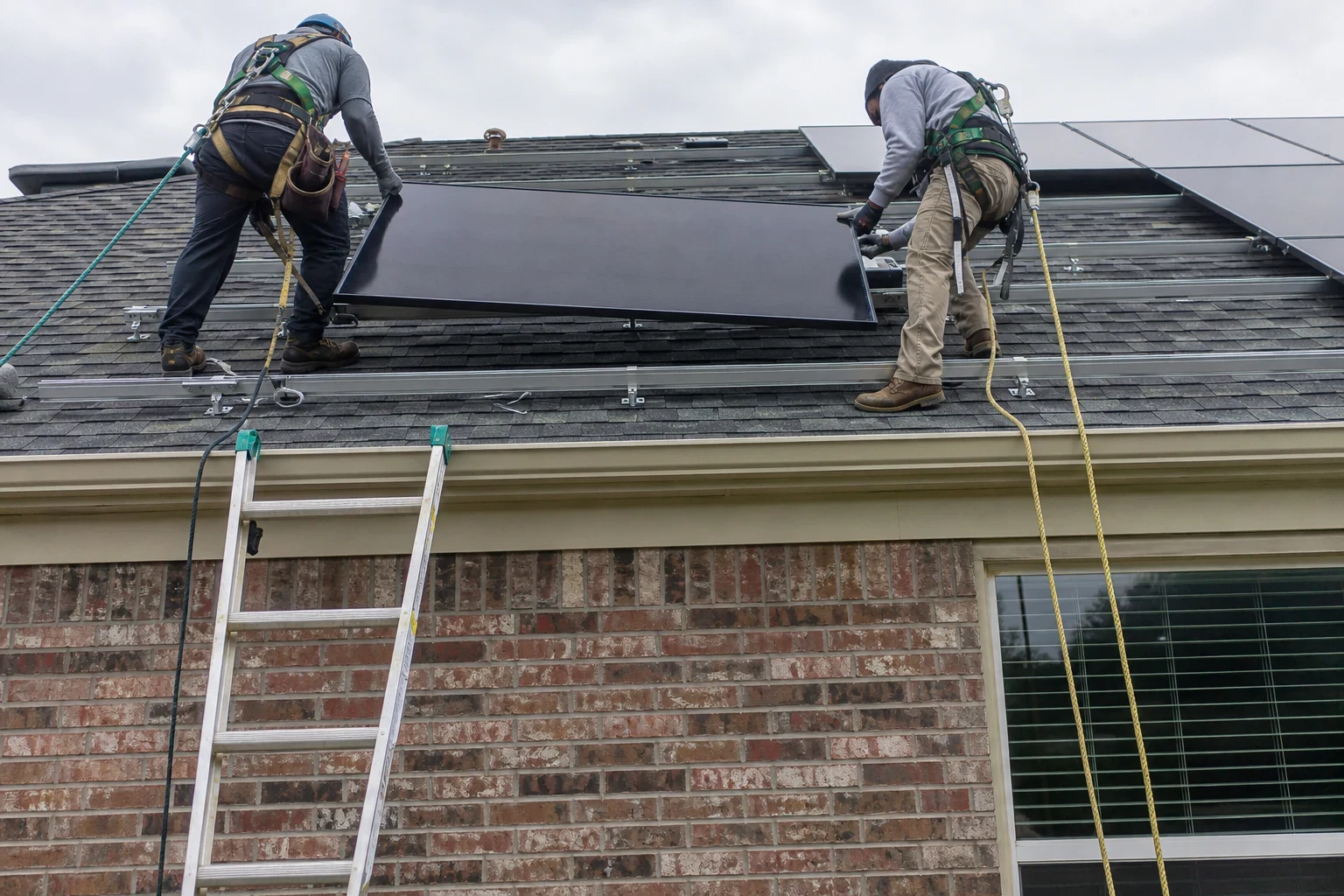
A solar system is panels, racking that ties them to your roof framing, inverters that turn their DC power into the AC your home uses, and the wiring that connects it all to your electrical panel and the utility meter. Each piece has to fit your house, not a sales sheet.
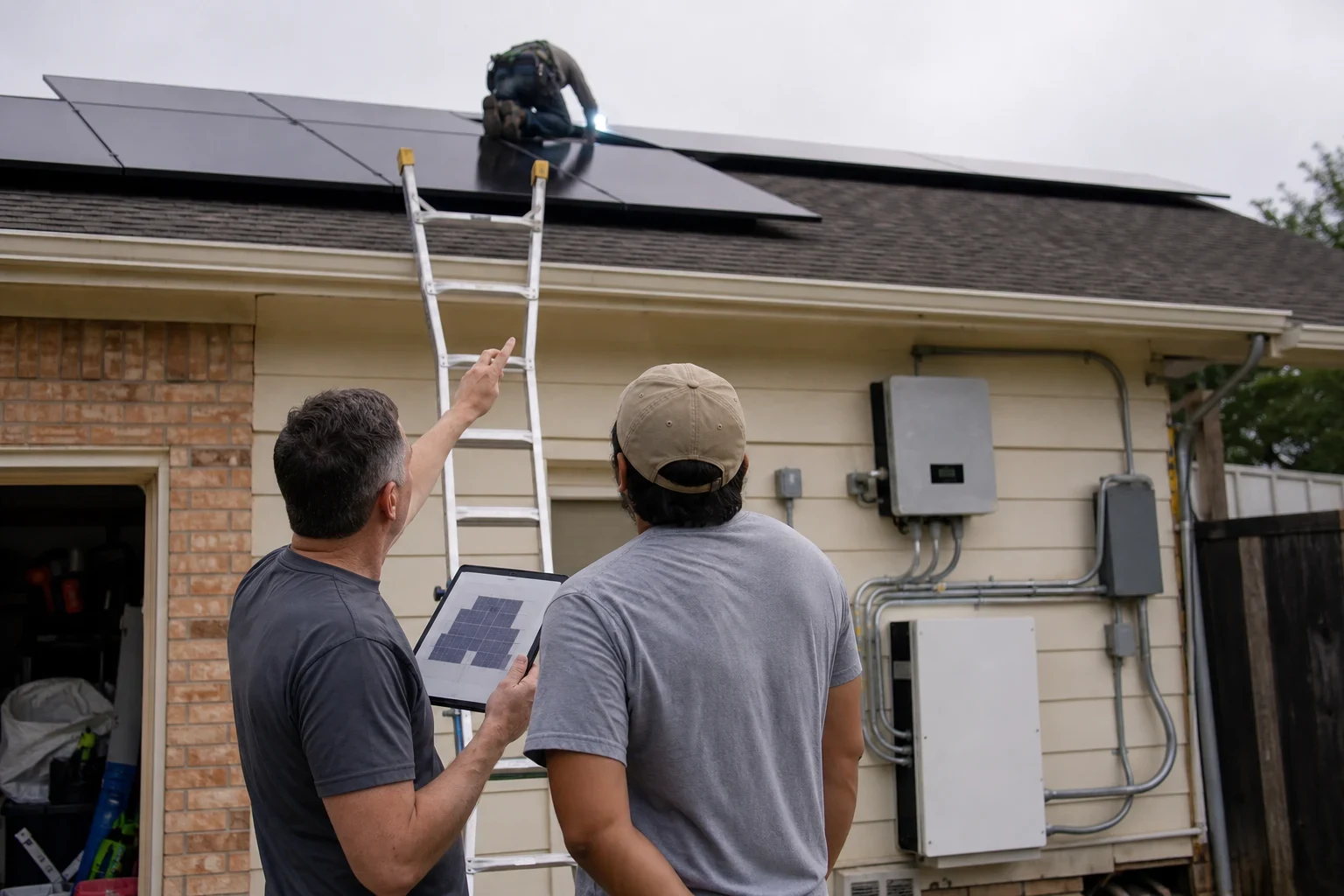
We start every job with an inspection. We check roof age and decking, measure the usable roof faces, note shade from trees and neighboring homes, and look at whether your main panel can take the new connection. You get our findings in plain words before we suggest anything.
Sometimes the answer is to wait. If your shingles have only a few years left, or a big oak shades the south side most of the afternoon, we say so. Putting panels on a roof that will need to come off soon costs you twice.
What Our Installation Covers
Roof, attic and panel check
We walk the roof, look in the attic for sagging or soft decking, and go over your main electrical panel and meter. We take photos so you can see what we saw.
System design from your bills
We size the system from your actual usage over twelve months, not a guess. North Texas summers push air conditioning loads high, so we look at your peak months closely.
Permit and grid hookup paperwork
The city permit is on us, along with the connection approval from your utility. We'll also point out what to ask your retail electric provider about buyback plans, because that sets what your extra power is worth.
Racking and flashing
Mounts are lagged into rafters, not just decking, and each penetration is flashed and sealed. This matters on homes that see hail and heavy spring rain.
Wiring and inverter setup
We run conduit neatly, label the disconnects, and set up monitoring so you can see production on your phone.
Cleanup and walkthrough
We pick up packaging, wire scraps and screws, and walk you through the system, the shutoffs and what normal production looks like.
Signs Solar May Fit Your Home
- High summer bills
- If your bills jump hard from June through September, that daytime cooling load lines up well with when panels produce the most.
- Open south or west roof faces
- Roof planes facing south or west with little shade are where panels earn their keep. East faces can work too, with less output.
- A roof with years left
- Panels last a long time. A roof in good shape with plenty of life left is the right starting point.
- Plans to stay put
- Solar pays back over years. If you plan to be in your home for a while, the math usually looks better.
- Interest in backup power
- If outages worry you, we can plan for battery storage now or leave room to add it later.
How the Work Goes, Start to Finish
- 1
Site visit and findings
We come out, check the roof, attic, panel and shade, and go over your bills. You get our findings and photos before any proposal.
- 2
Design and written estimate
If solar makes sense, we lay out the panel placement and equipment in a written, line-item estimate. You can see where every dollar goes.
- 3
Permit and approval
Once you say yes, we handle the city permit and the utility's connection approval. Waiting on those approvals tends to take longer than the install itself. We call you as each one clears.
- 4
Install day
Our crew is usually at your house for one to three days. We cover plants near the work area, try to leave the driveway open, and give you notice before the short power shutoff for the final tie-in.
- 5
City sign-off and turn-on
The city checks the work, the utility approves the connection, and then we turn the system on and show you how it runs.
What Moves the Price
No two roofs are the same, so we price each job after the inspection. Your written estimate breaks out equipment, labor, permits and any electrical upgrades, so nothing shows up later as a surprise.
- System size
- More panels means more equipment and labor. Size comes from your usage and how much roof you have to work with.
- Roof layout and pitch
- Steep roofs, two-story homes and roofs split into many small faces take more time and safety setup.
- Electrical panel condition
- Older or full main panels may need an upgrade or a different connection method. We find this on our first visit, not on install day.
- Equipment choice
- Microinverters, string inverters and panel models differ in cost and in how they handle partial shade. We explain the tradeoff for your roof.
- Add-ons
- Battery storage, critter guards and extra conduit runs add to the total. We list each one separately so you can decide.
Solar Installation Questions
- Will you tell me if solar isn't worth it for my house?
- Yes. If shade, roof condition or low usage make the numbers weak, we tell you after our visit. We would rather lose a sale than put up a system that disappoints you.
- Will drilling into my roof cause leaks?
- A leak around solar usually traces back to a mount fastened only to plywood decking, or to flashing that got skipped. We anchor each mount into a rafter and flash and seal every hole. Before we drill, we look in the attic so we know the framing we're fastening to.
- What happens to the extra power my panels make?
- It goes back to the grid through your meter. What you get for it depends on your retail electric plan, since buyback terms vary a lot in Texas. We help you know what questions to ask your provider.
- How long until the system is running?
- Install day itself is short. Permits, city sign-off and utility approval take most of the time, and that can stretch over several weeks. We track each step and let you know where things stand.
- Do I need a battery?
- No. Panels work tied to the grid without one. If you want power during outages, we can add battery storage now or plan the wiring so it is easy to add later.
- Do you work outside Rowlett?
- Yes. We install in Rowlett and nearby towns like Garland, Sachse, Wylie, Rockwall and Heath. Check our service areas page for the full list.
Start With an Honest Look at Your Roof
Tell us about your home and your bills, and we'll set a time to come out. You'll hear what we find before you hear any recommendation.