ServicesPanel Cleaning
Solar Panel Cleaning in Rowlett
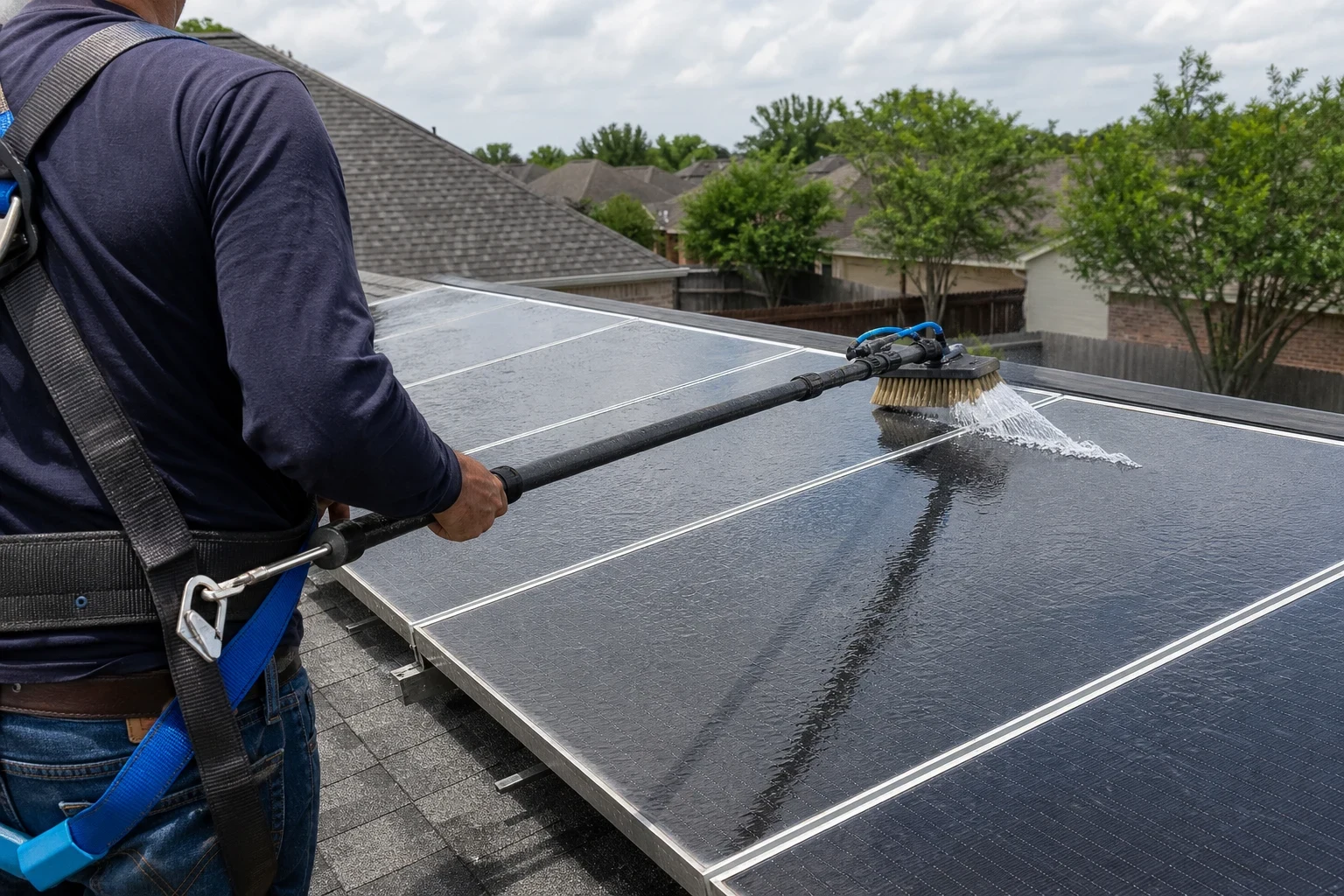
Dust, pollen and bird droppings cut into what your panels make. We clean them by hand with soft brushes and pure water, and we look over each panel as we go. You get clean glass and a plain report on what we saw.
Why Dirty Glass Costs You Power
Your panels turn sunlight into electricity, but only the light that reaches the cells counts. A gray haze or a handful of heavy bird spots blocks part of it. Panels are often wired together in strings, and one grimy or shaded panel can pull down the rest of its string. So a small mess can cost you more than it looks like.
Rain rinses some of it off, but not all. In north Texas, spring pollen and dry summer dust settle into a gray film that rain mostly smears around. Droppings bake onto hot glass and stay put.
We start every cleaning with a look before any water touches the glass. If a panel is cracked, a wire is hanging or something is nesting underneath, you hear about it first. Cleaning won't fix those problems, and we won't pretend it will.
What's Included in a Cleaning
A look before we wash
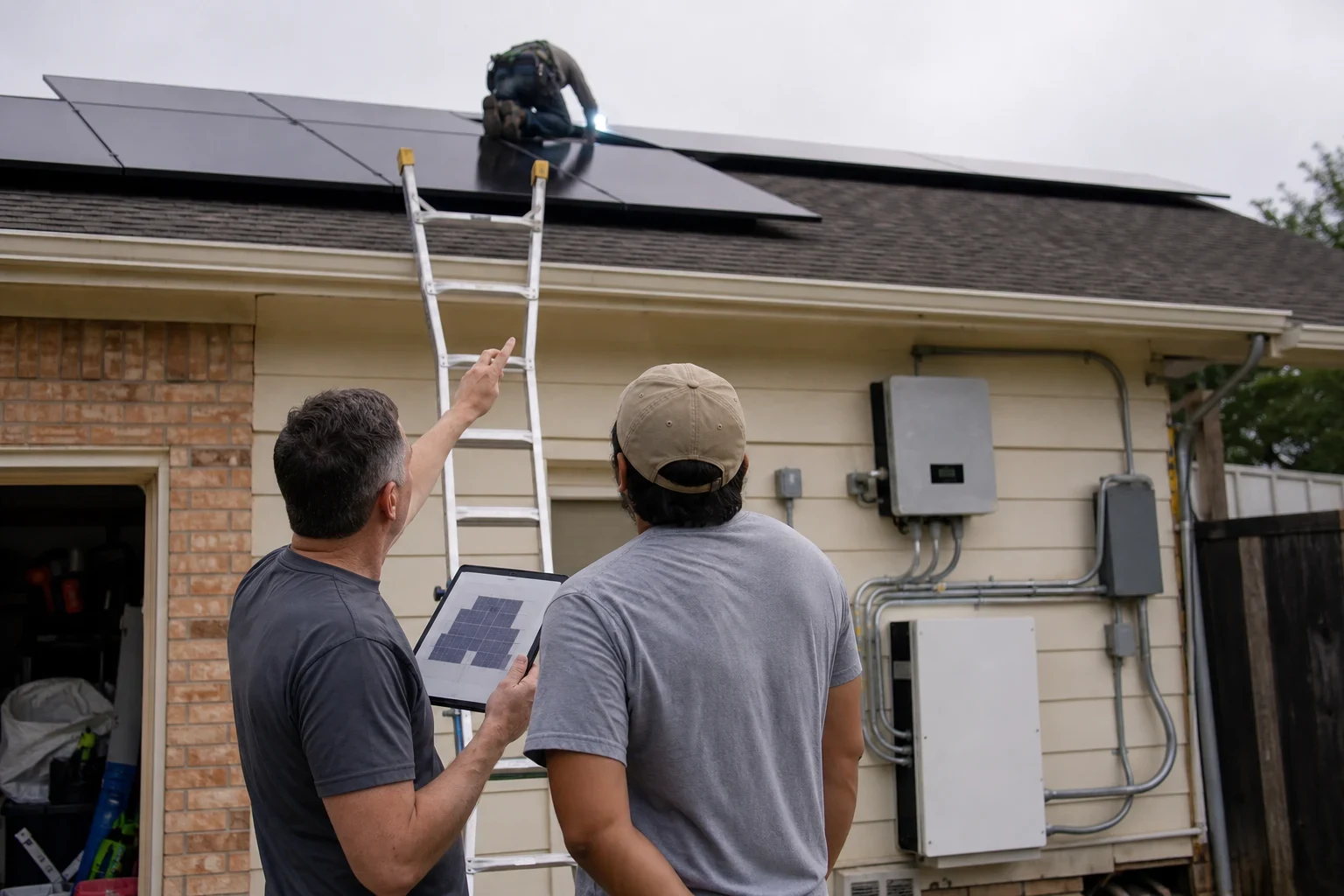
We walk the array and check the glass, frames, mounts and visible wiring. Anything off gets a photo so you can see it yourself.
Pure water, soft brushes
We use filtered, deionized water that dries without spots and brushes made for panel glass. No pressure washers, no scrapers and no harsh soap that can wear the coating or void a panel maker's terms.
Spot work on stuck-on mess
Bird droppings and baked-on grime get a soak and a gentle second pass. We don't scrub hard enough to scratch the surface.
Before and after output check
If you have a monitoring app, we look at production with you before and after. That shows whether dirt was really the issue or something else is going on.
Cleanup around your home
Runoff water is clean, so it won't hurt your plants. We pick up anything we knock loose and leave the yard the way we found it.
Signs Your Panels Need Cleaning
- Output has slipped on sunny days
- Compare a clear day this month to a clear day last year. A steady drop with no other change often points to dirt on the glass.
- You can see a film from the ground
- If the panels look hazy, yellow-green after pollen season or streaked after a dusty stretch, they need more than rain.
- Bird droppings in the same spots
- Birds like to perch on the top edge of an array. Those spots shade cells and can stay for months.
- Trees hang over the roof
- Leaves, sap and seed pods collect along the bottom edge of the panels. That buildup holds moisture and dirt.
- It's been a year or more
- Many homes do well with a cleaning about once a year. Longer than that, and the film usually builds past what weather clears.
How a Cleaning Visit Goes
- 1
We talk it through by phone
You tell us about your system, your roof and what you've noticed. We set a time, usually early in the day while the glass is still cool.
- 2
Inspection and photos
We check the array before cleaning and photograph anything that needs attention. You get the findings in plain words.
- 3
The wash
We rinse, brush gently and rinse again with pure water. Cool glass matters here, because cold water on a hot panel can stress it.
- 4
Wrap-up with you
We go over what we saw, show you the photos and compare output if you have monitoring. If anything needs a fix, we explain it and you decide what to do next.
What Moves the Price of a Cleaning
Cleaning prices depend on your system and your roof, not a flat number off a list. We ask a few questions on the phone so the price you hear makes sense before we show up.
- Size of the array
- A dozen panels and forty panels are very different jobs in hours on the roof. The panel count is one of the first things we ask about.
- Stories and slope
- Panels up on a second floor, or on a roof that slopes hard, mean more ladder work and more safety gear before the first rinse. That extra setup time shows up in the price.
- How dirty the glass is
- A light film washes off fast. Years of buildup or heavy droppings take soaking and extra passes.
- Getting to the array
- Panels split across several roof faces, or blocked by trees, take longer to reach and clean.
Panel Cleaning Questions
- How often should I have my panels cleaned?
- Once a year suits most homes. If trees hang over the roof or birds gather on the array, a spring and a fall visit can pay off. Your production data tells the real story, and we're glad to walk through it with you.
- Is it safe to wash my panels with a garden hose?
- Spraying from the yard does a bit of good. City water dries into mineral spots, though, and getting up on a roof next to wet, slick glass is how people get hurt. Leave pressure washers and stiff brushes out of it entirely, because either one can scratch or strip the coating on the glass.
- Will cleaning fix low production?
- Only if dirt is the cause. That's why we check the panels first and compare output after. If production stays low on clean glass, the problem is likely wiring, an inverter or a damaged panel, and our solar repair work covers that.
- Do you use soap or chemicals?
- No. Pure deionized water and soft brushes clean the glass well without leaving residue. Soaps can leave a film that catches more dust and may conflict with what the panel maker allows.
- What if you find damage while you're up there?
- We stop, take photos and tell you what we found. We don't start extra work without asking. You can decide on a repair later, after you've had time to think it over.
Ready for Clean Panels?
Tell us about your system and what you've noticed. We'll explain how the visit works and what affects the price, right on the call.